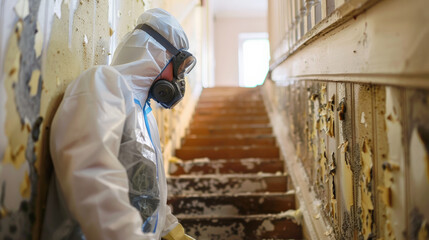
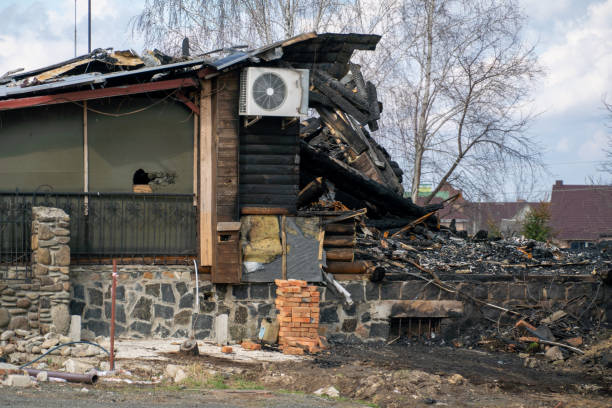
The puddle is gone. The towels are in the wash. You ran a fan for a couple days and the carpet seems okay when you walk across it. So the water damage is handled, right?
Not even close.
What you can see and feel with your bare feet tells you almost nothing about the moisture trapped inside your walls, under your subfloor, and above your ceilings. Water travels through building materials by capillary action — essentially wicking through the tiny pores in wood, drywall, and concrete the same way a paper towel absorbs a spill. The surface dries first while the core stays wet. And that hidden moisture is where mold starts, wood rot begins, and structural integrity quietly degrades.
Professional structural drying in Washington, DC is not about making things look dry. It is about making them measurably dry, all the way through, verified by data.
Structural drying is the controlled process of removing moisture from building materials — wall studs, subfloor sheathing, floor joists, concrete slabs, and insulation — using commercial-grade equipment and measured airflow strategies. The goal is to bring every affected material back to its equilibrium moisture content, which is the normal moisture level that material would hold in your Washington, DC climate without any water damage present.
This is where a concept called psychrometry comes in. Psychrometry is the science of how air temperature, humidity, and moisture interact. Here is the simplified version: warm air holds more moisture than cold air. A dehumidifier pulls moisture out of the air, lowering the humidity. Air movers push that drier air across wet surfaces, encouraging moisture to evaporate from the material into the air stream. The dehumidifier then captures that moisture again. This cycle repeats continuously until the materials are dry.
The key detail most people miss is that dehumidifier type matters enormously. A standard refrigerant dehumidifier you buy at a hardware store pulls maybe 30 to 50 pints per day and works best in warm conditions. A commercial Low Grain Refrigerant dehumidifier — called an LGR — can pull 17 to 20 gallons per day and continues working efficiently even as relative humidity drops below 40 percent. For large-scale water events or Washington, DC properties with concrete slab foundations, we may deploy desiccant dehumidifiers that use silica gel rotor technology to achieve extraordinarily low humidity levels that accelerate drying in challenging materials like concrete and plaster.
Equipment placement is not random. Every air mover has a specific position based on the room geometry, the type of wet material, and the location of the dehumidifier's intake and output. Pointing a fan at a wall does not dry the wall evenly. Positioning an air mover at a 15-degree angle against the baseboard creates a laminar airflow across the surface that maximizes evaporation across the entire wall face. These details are the difference between a three-day dry and a seven-day dry.
Before we place a single piece of equipment, we map the moisture. Every wall, every floor section, every ceiling plane in the affected area gets tested with penetrating and non-penetrating moisture meters. Pin-type meters drive two small probes into the material and measure electrical resistance between them — wetter material conducts electricity more easily, giving us an exact moisture content reading. Non-penetrating meters use radio frequency signals to scan below surfaces without making holes, allowing us to quickly identify wet zones across large areas.
We record all of these readings on a diagram of your Washington, DC property. This is the moisture map. It shows us exactly which areas are wet, how wet they are, and where the boundaries of the affected zone lie. It also becomes our daily tracking tool. Every 24 hours, we return and re-test every mapped point. We are looking for grain depression — the difference between the moisture content of the air and the moisture content of the material. As long as the material is wetter than the air, evaporation continues. When the material's moisture matches the target dry standard for your region, that section is cleared.
This data-driven approach prevents two problems. First, it stops us from removing equipment too early. Surface-dry materials that still read wet on a meter will grow mold within days if the drying equipment is pulled. Second, it prevents us from leaving equipment running unnecessarily long, which saves you money on the project duration.
We get calls every month from Washington, DC homeowners who thought their water damage was resolved. They cleaned up the visible water, ran fans for a day or two, and moved on. Three weeks later, they notice a musty smell. Six weeks later, they see dark spots forming on their baseboards. Two months later, a mold inspector finds extensive colonization behind the drywall.
At that point, the remediation project is dramatically more expensive than proper drying would have been. Walls that could have been dried in place now need to be demolished. Framing that needed four days of airflow now needs antimicrobial treatment and possibly replacement. The original water damage that might have cost a couple thousand dollars to dry professionally has turned into a ten-thousand-dollar mold remediation and rebuild.
Proper structural drying in Washington, DC is not a luxury. It is the most cost-effective way to prevent a small water event from becoming a large-scale restoration project.
The water is gone from your Washington, DC floor, but is it gone from inside your walls? From under your slab? From above your ceiling? The only way to know is to measure. And the only way to fix it is with commercial drying equipment operated by someone who understands the science of moisture movement.
Call 1-833-541-0100. We will come out, run a full moisture assessment of your Washington, DC property, and show you exactly where the wet spots are. If everything is dry, we will tell you and you will have peace of mind. If it is not, we will get the right equipment in place before mold has a chance to take hold.
"A failed dishwasher supply line soaked our kitchen and dining room. GBS quickly arrived, used pin meters and moisture mapping to find hidden water three feet high behind the cabinets, and set up air movers and dehumidifiers. This saved our cabinets and flooring and revealed how far the water traveled."
"The toilet supply line cracked on our second floor in Washington, DC. The team used moisture mapping to locate hidden water in the ceiling and joists, then vented the trapped moisture without tearing everything out. Their smart approach saved us thousands in drywall replacement."
"I tried drying my Washington, DC basement myself with a box fan, but two weeks later, I smelled mold. GBS Restoration found soaking wet wall studs my store-bought equipment couldn't reach. They dried the framing properly in three days, proving professional drying is essential."
Washington, D.C., formally the District of Columbia and commonly called Washington or D.C., is the capital city of the United States. The city is located on the east bank of the Potomac River, which forms its southwestern border with Virginia and borders Maryland to its north and east. The city was named for George Washington, a Founding Father, victorious commanding general of the Continental Army in the American Revolutionary War and the first president of the United States who is sometimes referred to as "Father of his country". The district is named for Columbia, the female personification of the nation.
Zip Codes in Washington, DC that we also serve: 20250 20010 20011 20012 20015 20520 20064 20418 20415 20388 20319 20020 20024 20510 20515 20591 20427 20422 20542 20540 20240 20245 20390 20005 20004 20003 20002 20001 20009 20008 20016 20317 20059 20057 20052 20017 20018 20565 20566 20560 20220 20551 20019 20230 20373 20260 20007 20006 20032 20036 20037 20204 20431 20045 20408 20535 20530 20013 20022 20026 20027 20029 20030 20033 20035 20038 20039 20040 20042 20043 20044 20047 20049 20050 20053 20055 20056 20058 20060 20061 20062 20063 20065 20066 20067 20068 20069 20070 20071 20073 20074 20075 20076 20077 20078 20080 20081 20082 20090 20091 20201 20202 20203 20206 20207 20208 20210 20211 20212 20213 20214 20215 20216 20217 20218 20219 20221 20222 20223 20224 20226 20227 20228 20229 20232 20233 20235 20237 20238 20239 20241 20242 20244 20251 20252 20254 20261 20262 20265 20266 20268 20270 20277 20289 20299 20301 20303 20306 20310 20314 20318 20330 20340 20350 20355 20370 20372 20374 20375 20376 20380 20389 20391 20392 20393 20394 20395 20398 20401 20402 20403 20404 20405 20406 20407 20410 20411 20412 20413 20414 20416 20417 20419 20420 20421 20423 20424 20425 20426 20428 20429 20433 20434 20435 20436 20437 20439 20440 20441 20442 20444 20447 20451 20453 20456 20460 20463 20468 20469 20470 20472 20500 20501 20502 20503 20504 20505 20506 20507 20508 20509 20511 20521 20522 20523 20524 20525 20526 20527 20528 20529 20531 20533 20534 20536 20537 20538 20539 20541 20543 20544 20546 20547 20548 20549 20552 20553 20554 20555 20557 20559 20570 20571 20572 20573 20575 20576 20577 20578 20579 20580 20581 20585 20586 20590 20593 20594 20597 20599 56901 56902 56904 56908 56915 56920 56933 56935 56944 56945 56950 56965 56967 56972 56998 56999