Where Mold Grows Behind Walls, In Crawlspaces, and Inside HVAC Systems
Visible mold on a bathroom ceiling or a kitchen window frame is easy to spot and relatively simple to clean. Hidden mold is a completely different situation. It colonizes materials inside enclosed spaces where moisture is present and airflow is minimal — exactly the conditions mold needs to thrive.
Behind drywall is one of the most common locations. A slow pipe leak inside a wall cavity can keep the back face of drywall wet for weeks or months without any visible sign on the front of the wall. The paper facing on the back side of gypsum board is an excellent food source for mold. By the time you notice discoloration on the painted surface, the colony behind the wall may extend several square feet in every direction from the moisture source.
Crawlspaces in Bronx, NY homes are another frequent hiding spot. Ground moisture evaporates into the crawlspace, condenses on cool floor joists and subfloor sheathing, and creates a permanent damp environment. If the crawlspace lacks a proper vapor barrier or has inadequate ventilation, mold can colonize the entire underside of your floor structure without you ever knowing. The musty smell migrates upward through gaps in the flooring, register openings, and around plumbing penetrations.
HVAC ductwork is perhaps the most concerning location because the system actively distributes mold spores throughout your entire home. Condensation forms on the interior surfaces of supply ducts, particularly near the evaporator coil where air temperature drops rapidly. Dust inside the ductwork provides nutrients. Combine moisture, nutrients, and darkness and mold can colonize the lining of your air distribution system. Every time your system cycles on, it pushes spore-laden air into every room.
How We Find Mold You Cannot See in Your Bronx, NY Property
Finding hidden mold requires tools and techniques that go beyond visual inspection. Our detection process uses three complementary methods.
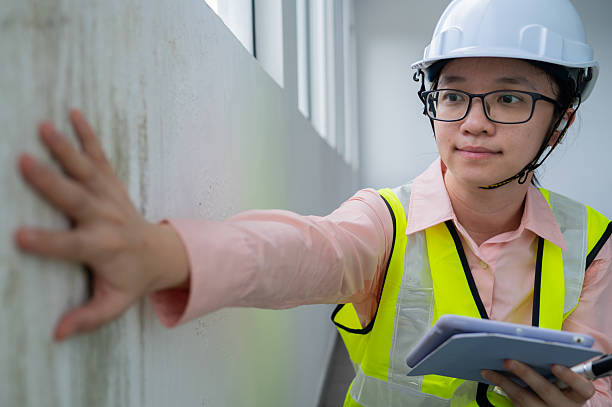
Infrared thermal imaging cameras detect temperature differences on wall, ceiling, and floor surfaces. Moisture trapped behind a wall cools the surface slightly compared to the surrounding dry area, creating a thermal anomaly visible on camera. This technology lets us scan entire rooms in minutes and identify areas of concern without making a single hole in your wall. It does not detect mold directly, but it reliably identifies the moisture conditions where mold grows.
Pin-type and pinless moisture meters let us quantify what the thermal camera flags. A pin meter drives two small probes into the material and measures electrical resistance to give us an exact moisture content percentage. A pinless meter uses radio frequency scanning to check materials without penetration. We use both to confirm moisture presence and determine the extent of the wet zone before recommending any demolition.
When we need to confirm mold presence definitively, air sampling provides laboratory-verified data. We collect air samples from suspect areas and from a clean outdoor control location, then send them to an accredited laboratory for spore identification and quantification. The lab report tells us not just whether mold is present, but which species are present and at what concentration relative to normal outdoor levels. That information shapes our remediation protocol.
Our Mold Remediation Process After Detecting in Your Bronx, NY Home
Once we locate and confirm hidden mold, the remediation follows IICRC S520 protocols designed to remove the contamination without spreading it to clean areas of your home.
We establish containment first. Polyethylene sheeting seals off the work area from the rest of your Bronx, NY home. Negative air machines equipped with HEPA filters pull air from inside the containment zone and exhaust it outside, creating lower air pressure inside the work area than outside it. This pressure differential ensures that when we disturb mold during removal, the spores get pulled into the filter rather than drifting into your living spaces.
Inside containment, we remove all mold-contaminated materials. Drywall with mold on the back face gets cut out beyond the visible colony boundary. Insulation in contaminated wall cavities gets removed. If mold has colonized structural lumber like studs or joists, we abrasively clean the wood surface to remove the growth and apply antimicrobial treatment. Unlike drywall, structural wood can typically be saved because the mold does not penetrate deeply into solid lumber.
For HVAC mold, the approach involves cleaning the ductwork interior with HEPA-filtered vacuum equipment, cleaning or replacing the evaporator coil, and treating the system with antimicrobial solution. If duct lining material is contaminated, it may need replacement since the fibrous material harbors mold at a level that surface cleaning cannot resolve.
After removal is complete, we conduct post-clearance air testing. A third-party inspector collects air samples from inside the remediation area with the containment still in place. The lab results must show mold spore counts at or below normal outdoor levels before we remove containment and consider the job complete. This verification step protects you with documented proof that the remediation was successful.