How Structural Drying Works in Laurel Hill, NC
Structural drying is the controlled process of removing moisture from building materials — wall studs, subfloor sheathing, floor joists, concrete slabs, and insulation — using commercial-grade equipment and measured airflow strategies. The goal is to bring every affected material back to its equilibrium moisture content, which is the normal moisture level that material would hold in your Laurel Hill, NC climate without any water damage present.
This is where a concept called psychrometry comes in. Psychrometry is the science of how air temperature, humidity, and moisture interact. Here is the simplified version: warm air holds more moisture than cold air. A dehumidifier pulls moisture out of the air, lowering the humidity. Air movers push that drier air across wet surfaces, encouraging moisture to evaporate from the material into the air stream. The dehumidifier then captures that moisture again. This cycle repeats continuously until the materials are dry.
The key detail most people miss is that dehumidifier type matters enormously. A standard refrigerant dehumidifier you buy at a hardware store pulls maybe 30 to 50 pints per day and works best in warm conditions. A commercial Low Grain Refrigerant dehumidifier — called an LGR — can pull 17 to 20 gallons per day and continues working efficiently even as relative humidity drops below 40 percent. For large-scale water events or Laurel Hill, NC properties with concrete slab foundations, we may deploy desiccant dehumidifiers that use silica gel rotor technology to achieve extraordinarily low humidity levels that accelerate drying in challenging materials like concrete and plaster.
Equipment placement is not random. Every air mover has a specific position based on the room geometry, the type of wet material, and the location of the dehumidifier's intake and output. Pointing a fan at a wall does not dry the wall evenly. Positioning an air mover at a 15-degree angle against the baseboard creates a laminar airflow across the surface that maximizes evaporation across the entire wall face. These details are the difference between a three-day dry and a seven-day dry.
Moisture Mapping: Finding Water Trapped in Your Laurel Hill, NC Walls and Floors
Before we place a single piece of equipment, we map the moisture. Every wall, every floor section, every ceiling plane in the affected area gets tested with penetrating and non-penetrating moisture meters. Pin-type meters drive two small probes into the material and measure electrical resistance between them — wetter material conducts electricity more easily, giving us an exact moisture content reading. Non-penetrating meters use radio frequency signals to scan below surfaces without making holes, allowing us to quickly identify wet zones across large areas.
We record all of these readings on a diagram of your Laurel Hill, NC property. This is the moisture map. It shows us exactly which areas are wet, how wet they are, and where the boundaries of the affected zone lie. It also becomes our daily tracking tool. Every 24 hours, we return and re-test every mapped point. We are looking for grain depression — the difference between the moisture content of the air and the moisture content of the material. As long as the material is wetter than the air, evaporation continues. When the material's moisture matches the target dry standard for your region, that section is cleared.
This data-driven approach prevents two problems. First, it stops us from removing equipment too early. Surface-dry materials that still read wet on a meter will grow mold within days if the drying equipment is pulled. Second, it prevents us from leaving equipment running unnecessarily long, which saves you money on the project duration.
The Cost of Skipping Professional Drying in Laurel Hill, NC
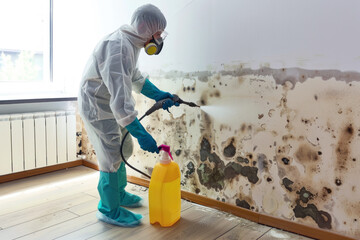
We get calls every month from Laurel Hill, NC homeowners who thought their water damage was resolved. They cleaned up the visible water, ran fans for a day or two, and moved on. Three weeks later, they notice a musty smell. Six weeks later, they see dark spots forming on their baseboards. Two months later, a mold inspector finds extensive colonization behind the drywall.
At that point, the remediation project is dramatically more expensive than proper drying would have been. Walls that could have been dried in place now need to be demolished. Framing that needed four days of airflow now needs antimicrobial treatment and possibly replacement. The original water damage that might have cost a couple thousand dollars to dry professionally has turned into a ten-thousand-dollar mold remediation and rebuild.
Proper structural drying in Laurel Hill, NC is not a luxury. It is the most cost-effective way to prevent a small water event from becoming a large-scale restoration project.