Why Smoke Odor Lingers After Surface Cleaning
Smoke is not a single substance. It is a complex mixture of particulate matter, volatile organic compounds, and gaseous byproducts generated by incomplete combustion. When materials burn, they release tiny particles — some visible as soot, others microscopic — that travel with heated air currents through every opening in your home. Doorways, vent returns, gaps around electrical outlets, the space between floorboards — smoke finds all of it.
These particles do not just land on surfaces. They bond to them. Smoke particulates carry an electrostatic charge that causes them to cling to walls, ceilings, and fabrics. On porous materials like drywall, unfinished wood, and upholstery, the particles penetrate beneath the surface layer and lodge in the material's cellular structure. That is why wiping down a smoke-damaged wall with a wet cloth does almost nothing. You are cleaning the top layer while the odor source sits a sixteenth of an inch deeper.
Even more challenging, the type of fire determines the type of residue. A kitchen grease fire produces protein-based smoke — thick, sticky, yellowish, and intensely foul. An electrical fire releases chemical smoke from burning wire insulation and plastic components. A bedroom fire involving polyester bedding and foam mattresses generates petroleum-based soot — fine, black, and oily. Each residue has a different chemical composition and requires a different removal approach.

The Science Behind Professional Smoke Odor Elimination in San Francisco, CA
Effective smoke odor removal happens in three stages, and skipping any one of them means the smell comes back.
- Stage one is source removal. Before any deodorization technology can work, the physical smoke residue must be cleaned from every surface. Our crews use dry chemical sponges on ceilings and walls to lift soot without smearing it. We HEPA-vacuum soft surfaces, clean hard surfaces with specialized solvent-based cleaners matched to the residue type, and — this step is critical — we clean the inside of your HVAC ductwork. Your air handler has been recirculating smoke particles since the moment the fire started. If the ducts are not cleaned, they continuously re-deposit soot every time the system runs. Every surface cleaning you do gets undone the next time the heat or air conditioning kicks on.
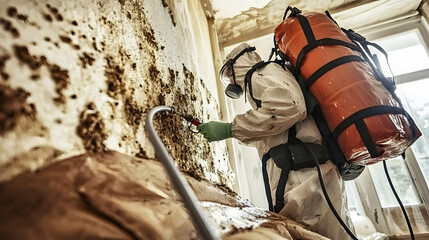
- Stage two is atmospheric treatment. This is where professional equipment does what air fresheners and home air purifiers physically cannot. We deploy hydroxyl generators throughout the affected areas of your San Francisco, CA home. These machines produce hydroxyl radicals — the same reactive molecules that occur naturally in Earth's atmosphere when UV light interacts with water vapor. Hydroxyl radicals are extraordinarily reactive. They attack odor-causing molecules and break apart their chemical bonds, converting them into carbon dioxide and water. Unlike ozone generators, which require full evacuation of the property because ozone gas is harmful to breathe, hydroxyl generators are safe to operate in occupied spaces. You can stay in your home while they run.For severe cases involving protein fires, we may also deploy thermal fogging. This technique heats a deodorizing solution into a fine vapor that behaves like smoke — it drifts into the same cracks, seams, and cavities that smoke originally penetrated. The deodorizer bonds with trapped smoke molecules and neutralizes them where they sit. Thermal fogging reaches places that surface cleaning cannot touch.
- Stage three is verification. We do not declare the job done based on whether we can still smell smoke. Noses adapt. After a few hours in a space, your olfactory system stops registering background odors. We bring in people who have not been in the environment during treatment to conduct a fresh air assessment, and we verify that all surfaces have been properly cleaned by checking for residue under UV light.